At-A-Glance
Technically Complex Product Design
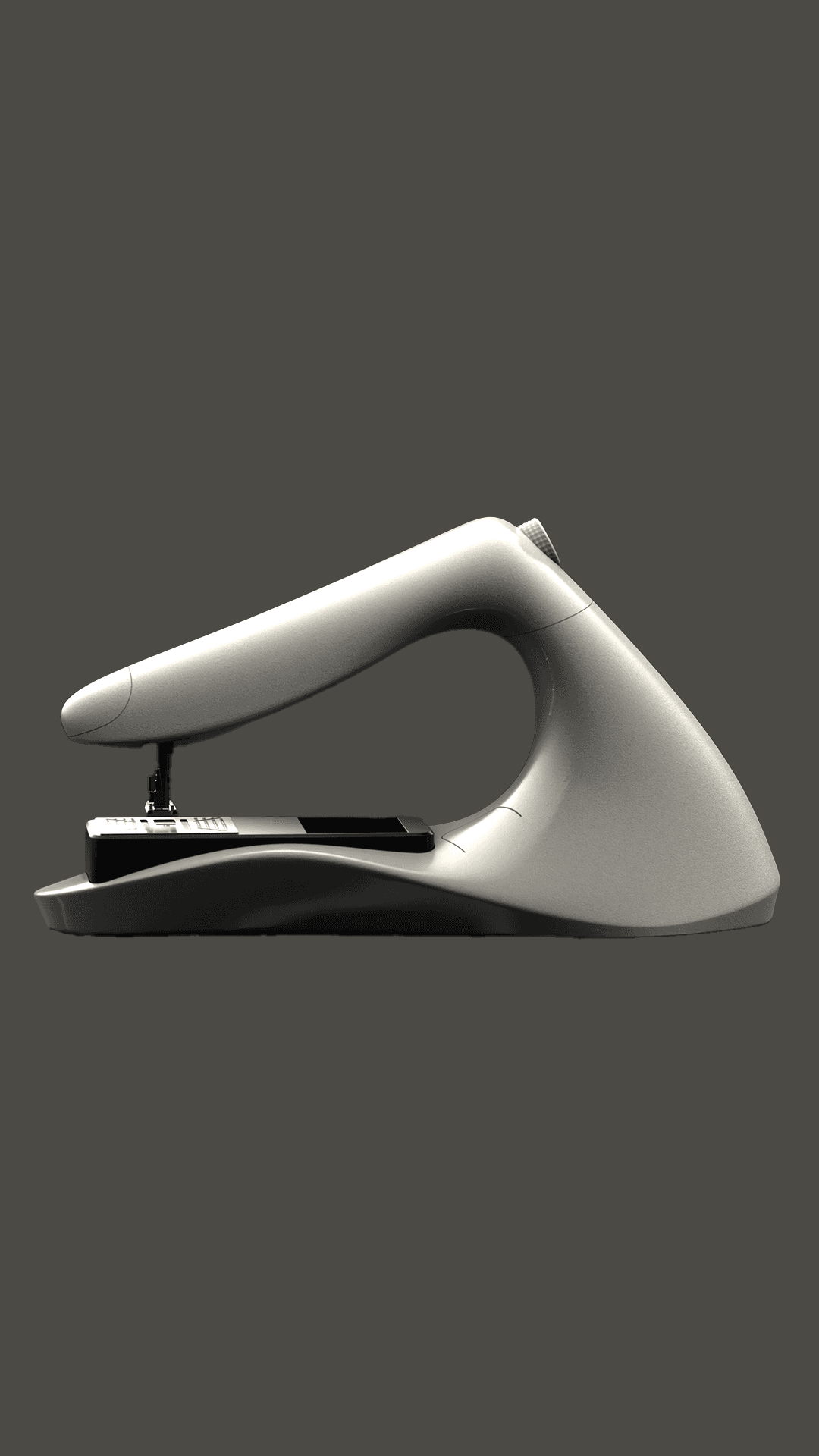
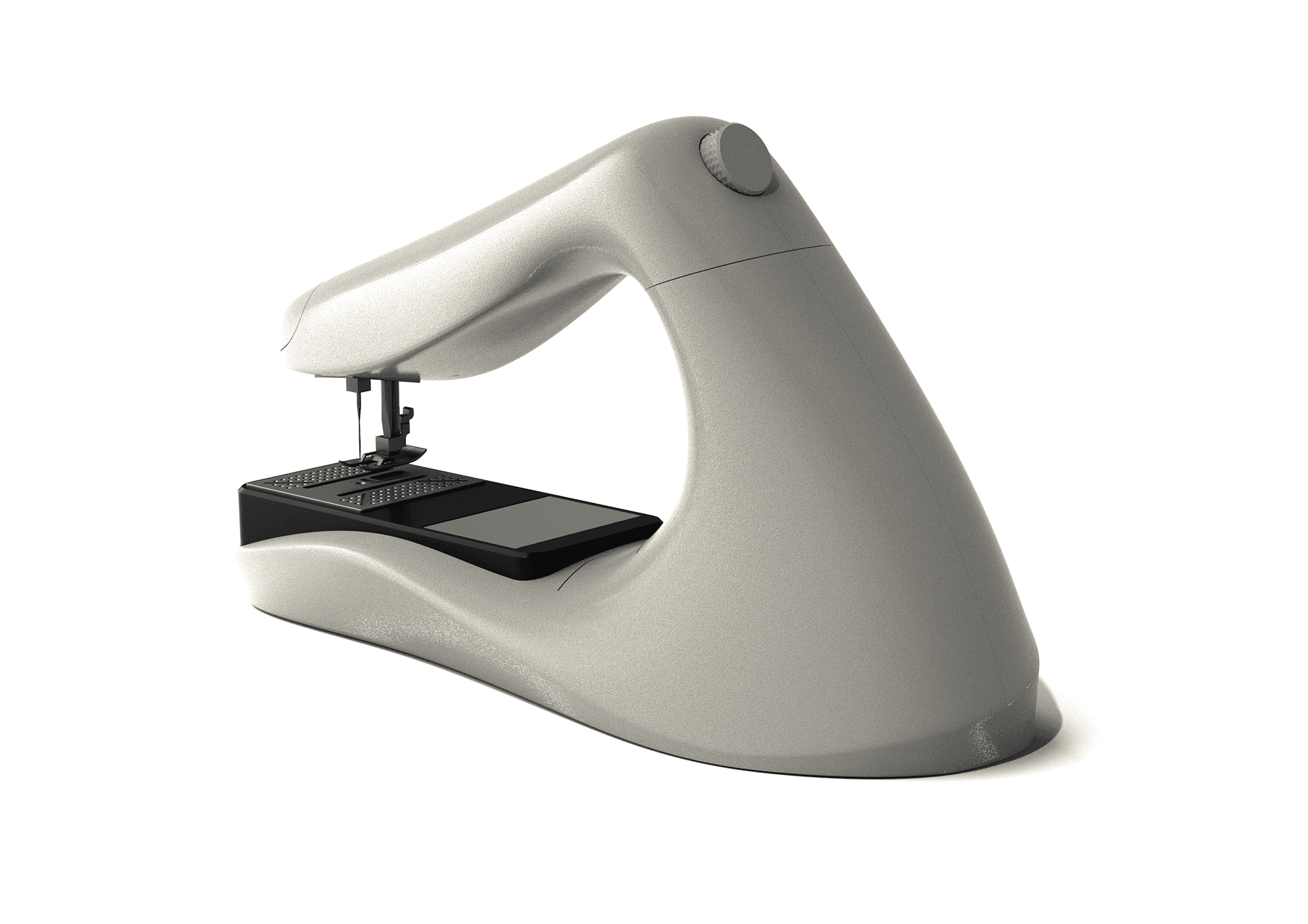
This portable sticking machine is ergonomic and easy to use designed to solve problems like, difficulty of carrying, lack of functionality, hardships faced while using, missing ergonomics and lack of human considerations and empathy in general. This machine aims to reduce problems faced by real world user of sewing machine and offer a portable, more appealing alternatives.
Stitching Made Ergonomic and Portable
| Solo
| My Role
| Timeline
| Tools
Product Design, User research, Prototyping, 3d Modelling
December 2023 - January 2024
Miro, Rhino, Blender
All of us have wished we could easily stitch something together at some point of time
Starting thoughts…
I have at some time or the other wished I could stitch, stitch something that tore or even a new shirt for myself. But I never cared enough to learn the skill, it seems incredibly difficult at the least to a newbie. I saw the usefulness of stitching and thought how can we make this easier, more ergonomic and improve the experience overall.
Solution
Make stitching machines User centric
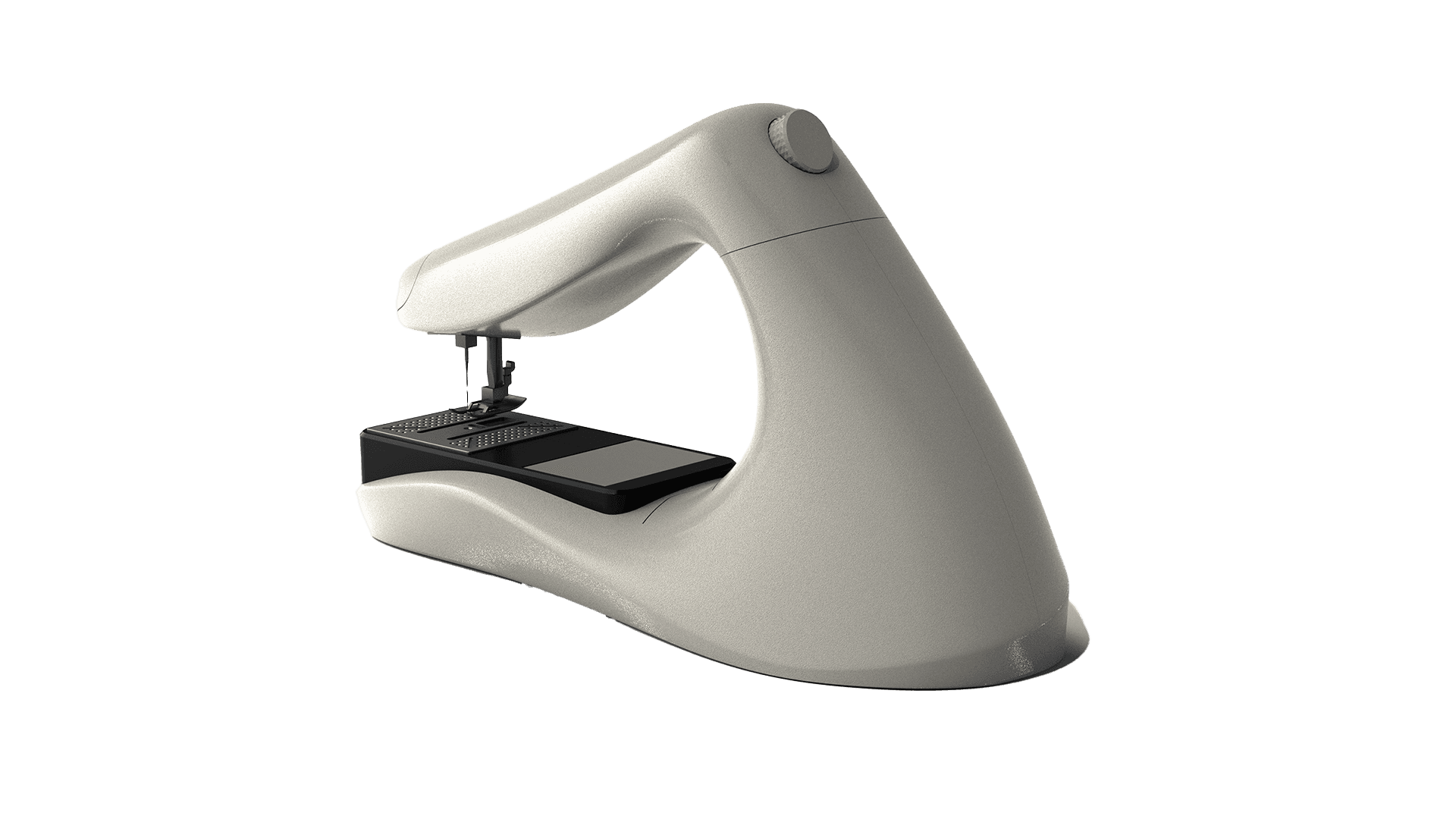
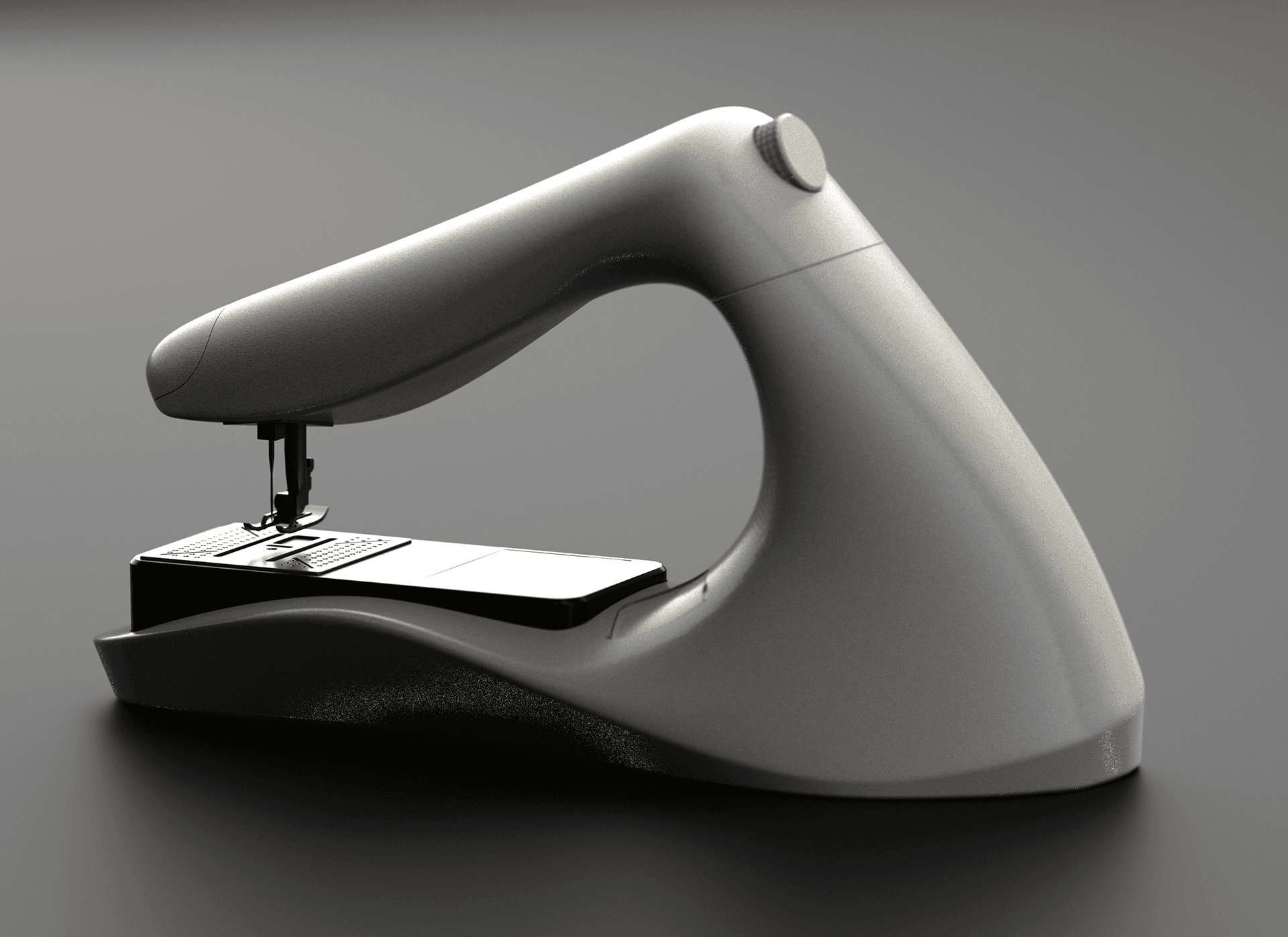
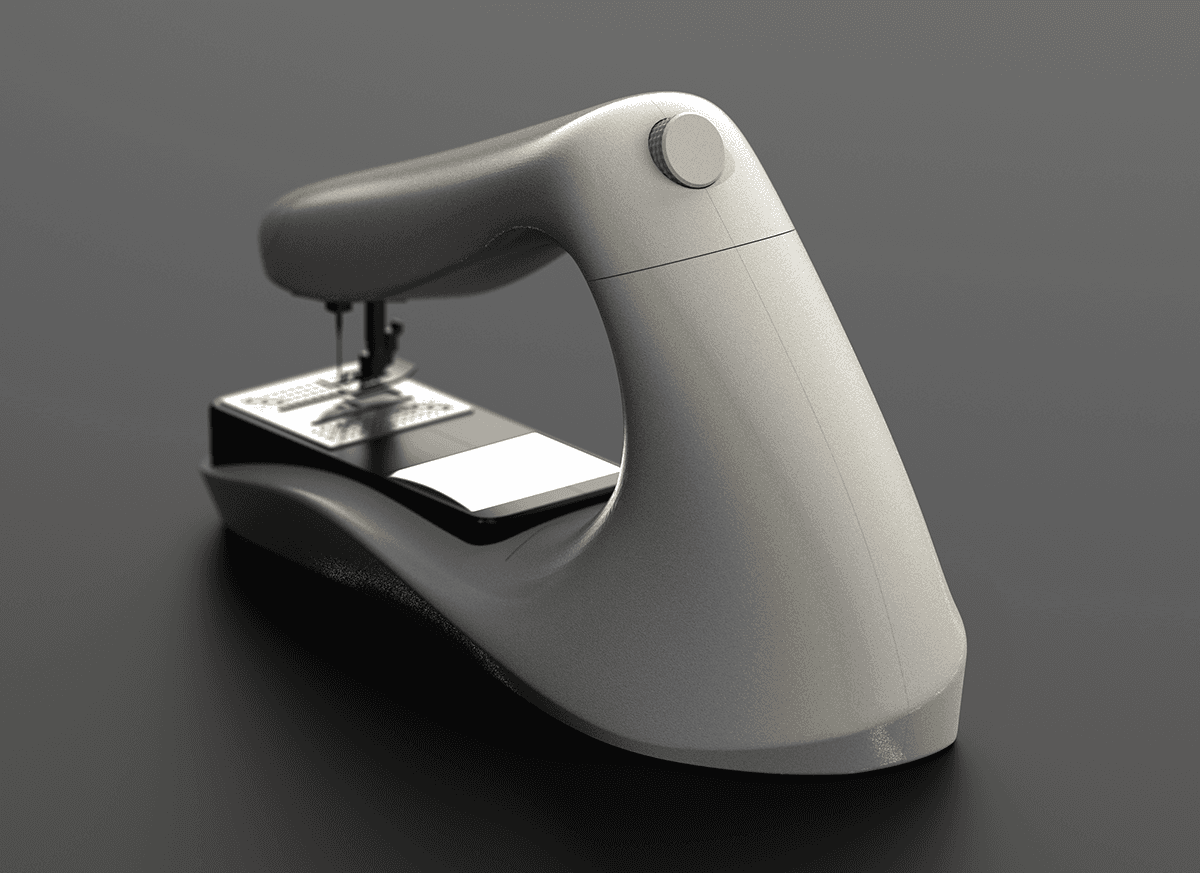
It is portable use on the go type of machine, which can be use with an extensive range of stitching capabilities and an ergonomic user centric design. It delivers full functionality of a sewing machine while being smaller and easy to carry.
Portable Stitching Machine
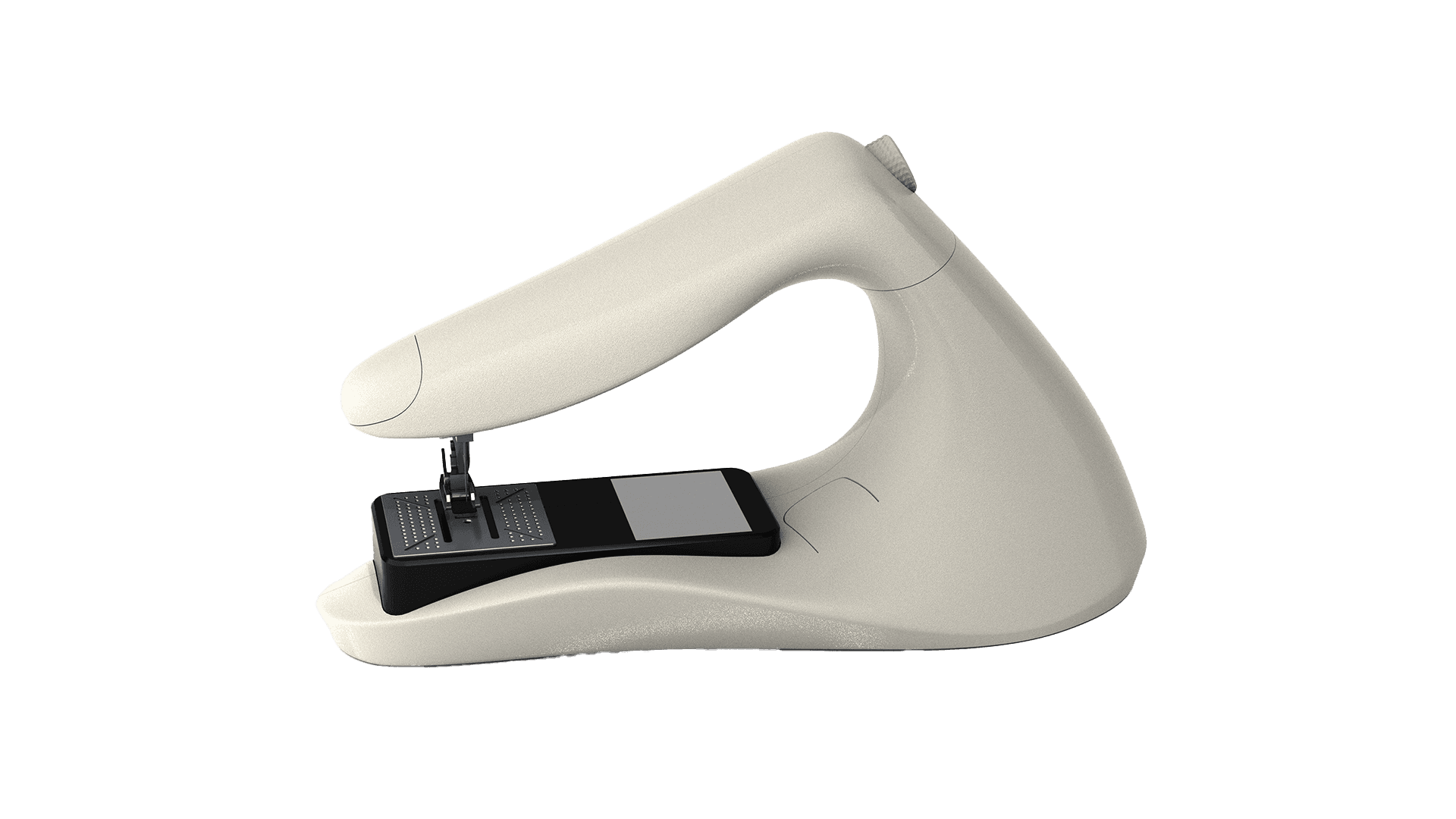
It is easy to carry by holding the bar in your palms.It allows for easy usage on the go, while at home or any other workplace.
Portable, Handheld.
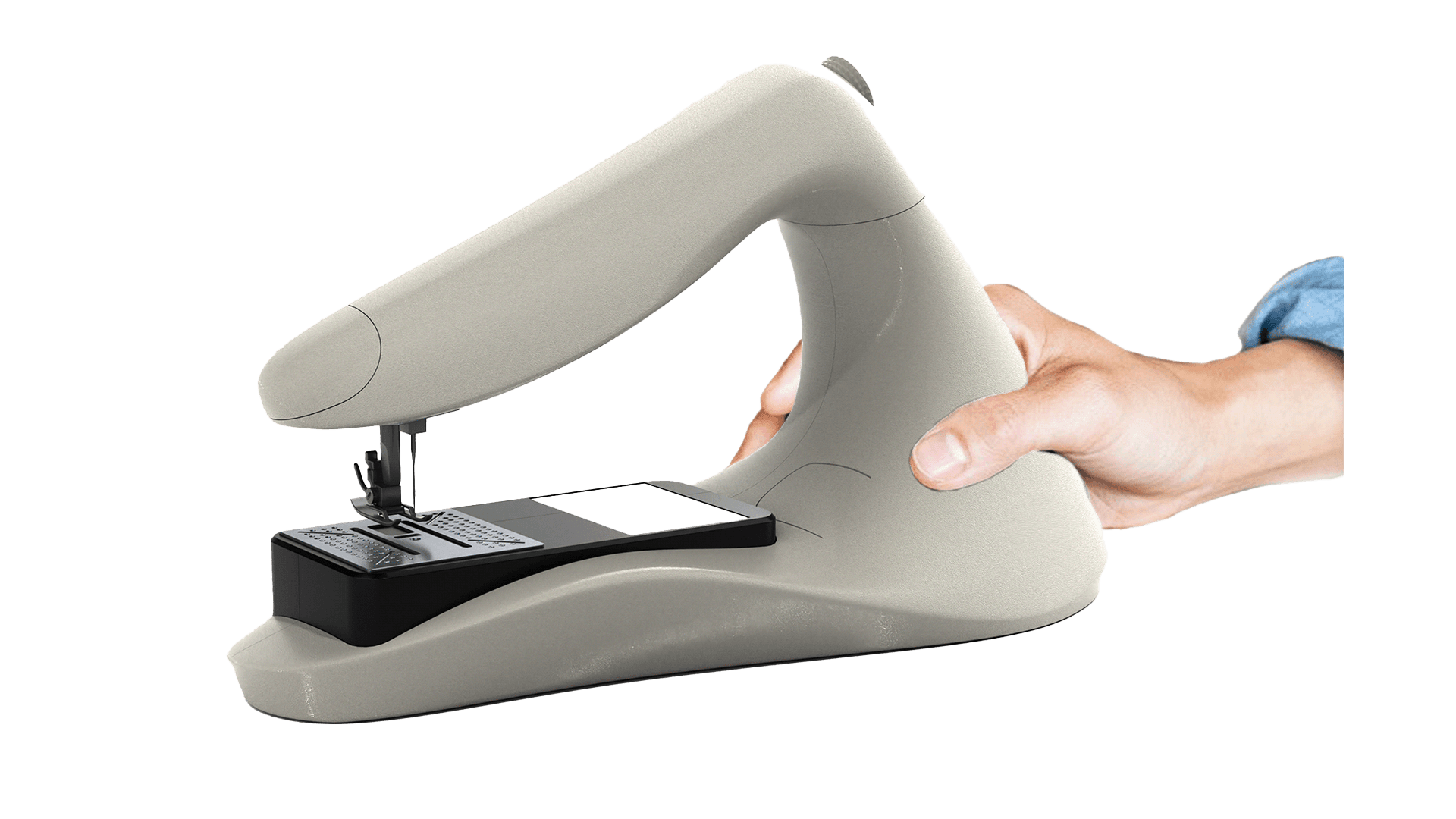
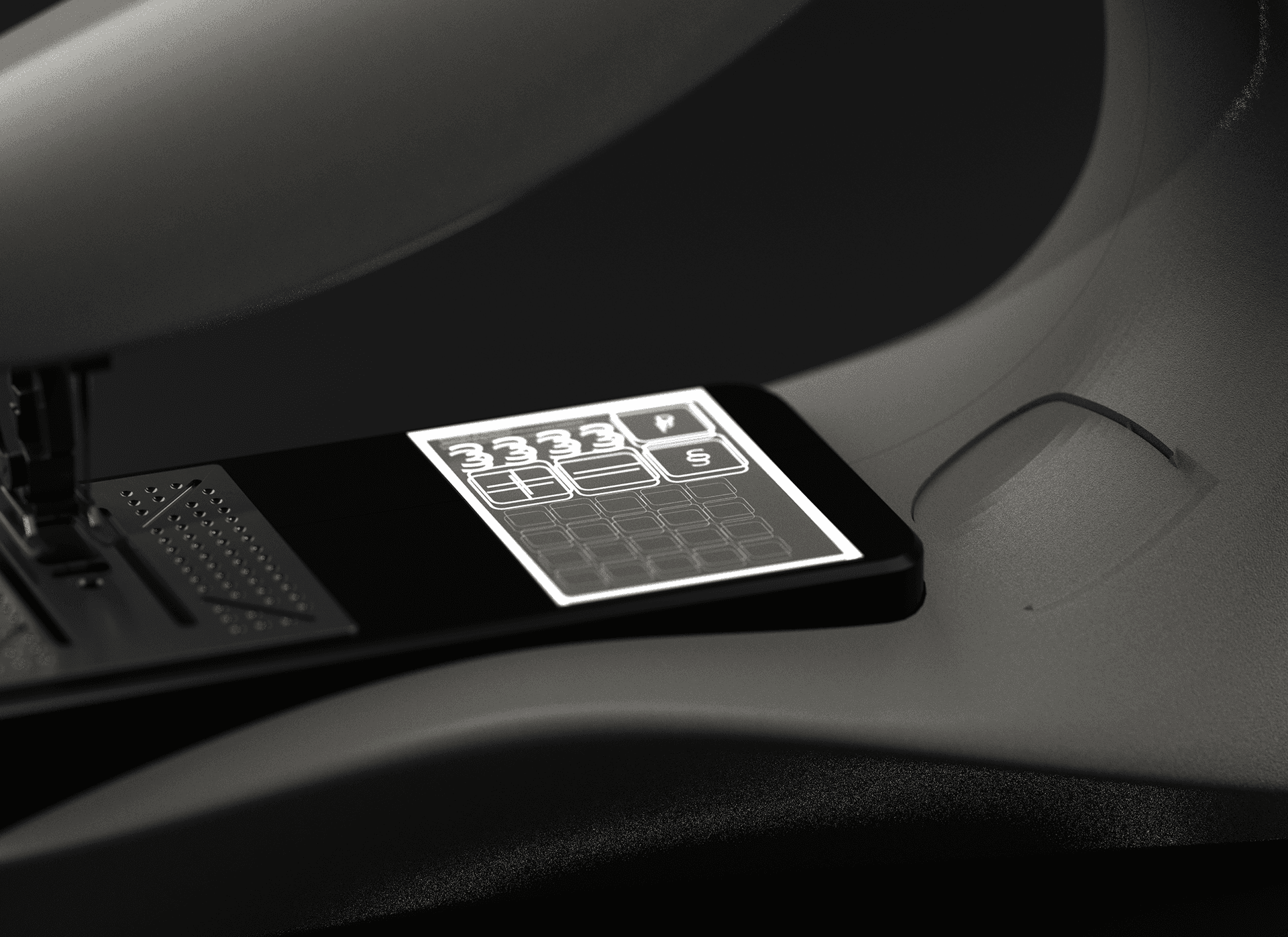
It offers most used functions of a typical stitching machine, like on the go tension adjustment and offers various kinds of stitches. While at the same time being in a much smaller package.
A Plethora
of Functionality
DISCOVER
What problems do user face while using a stitching?
Why do people use stitching machines?
How can we transform the experience and make it user centric?
Secondary research
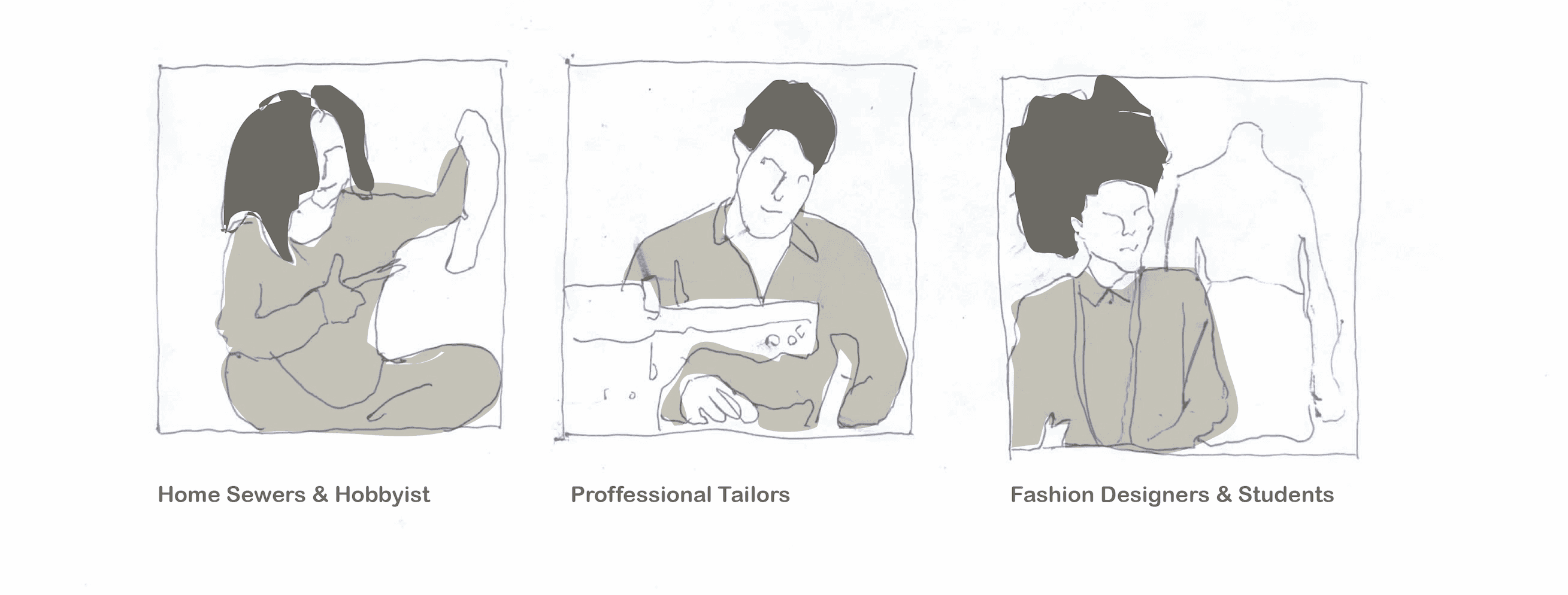
Starting with white paper research, I began to understand to understand what are various mechanisms that play role in a stitching machine. I understood and established my user base. I Looked at the evolution and history of the machine which helped me establish a need for revolution in design based on users and not just evolution based on facilities available and requirement of the industry or economics that has been happening with the stitching machine. Also understanding alternatives.
Mechanism of how it works-
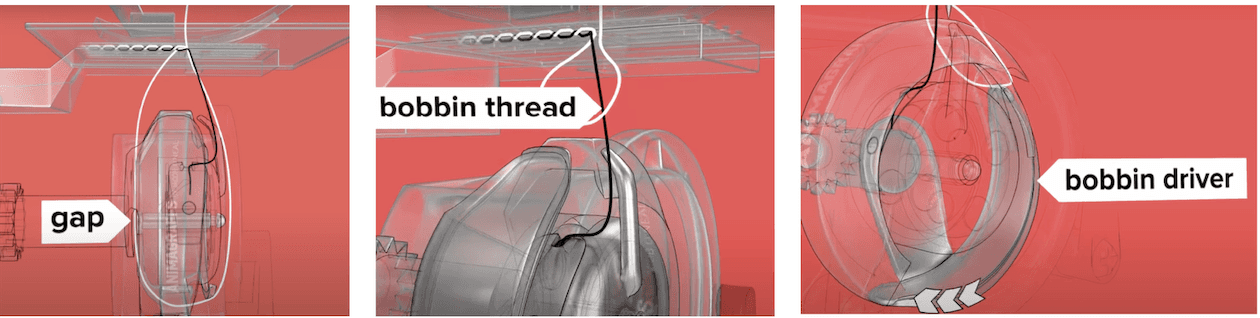
The sewing process begins with the needle driving the top thread through the fabric. As the needle penetrates, a rotating shuttle hook engages by “hooking” the top thread. This shuttle hook, located inside the race, is designed to float freely, allowing the top thread to pass entirely around it. At this stage, the top thread forms a loop and twists around the bobbin thread.
The floating shuttle hook is powered by the bobbin driver, which first pushes on one side of the shuttle hook, creating a gap through which the thread can pass. It then pushes on the opposite side, allowing the thread to escape and complete the loop. Meanwhile, a retaining ring, with a notch to keep the bobbin stationary, ensures that the bobbin does not rotate unnecessarily. The thread passes through this notch as it moves around the shuttle hook and bobbin assembly.
In tandem with these movements, the take-up lever plays a crucial role by providing slack in the top thread to form the loop and then pulling the thread tight at the end of the stitch, ensuring a secure and neat finish. This entire mechanism enables automatic stitching, efficiently coordinating the shuttle hook, bobbin thread, and top thread to create a perfect stitch.
Users
Understanding Alternatives
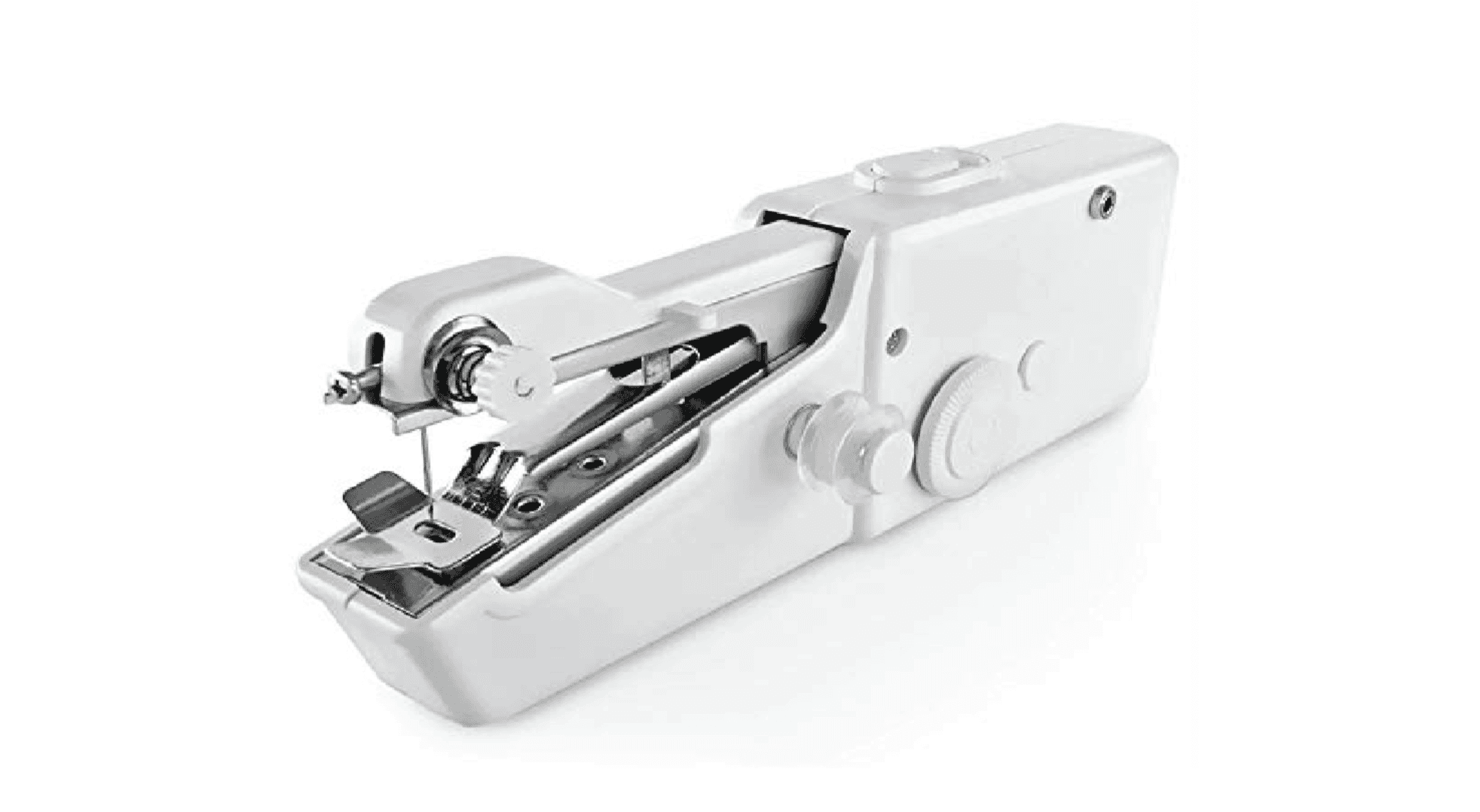
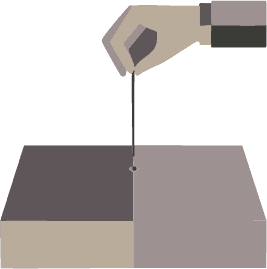
Sewing has evolved with technology, offering various methods to suit different needs. Traditional sewing machines are powerful, offering high precision and speed for large-scale projects. They handle heavy fabrics and deliver consistent stitches, making them ideal for professional tailors and large workloads. However, they are bulky, require a dedicated workspace, and can be expensive to maintain. Portable sewing machines, on the other hand, provide flexibility and convenience. Compact and lightweight, they’re easy to carry, making them perfect for small projects or repairs on the go. While they are less powerful than traditional machines and may not handle thicker fabrics as effectively, their ease of use and mobility are huge benefits. Lastly, hand sewing remains an essential skill, offering unparalleled control for intricate details and delicate fabrics. It requires no setup, making it highly accessible, but is time-consuming and can be harder to achieve uniform stitches, especially for larger projects. Each method serves a unique purpose, depending on the complexity, size, and portability required for the task.
"Okay now I understand how a sewing machine works, what are the benefits and pitfalls of existing solutions, and who is my target user base. I feel like understanding issues through my target user base would yield me understanding of the actual problems, let's hear them out!"
Survey
Understanding the type of user, how they use the machine, what they think about the usability, their concerns and opinions gave me direction to pursue and understand the user even further.

X 42
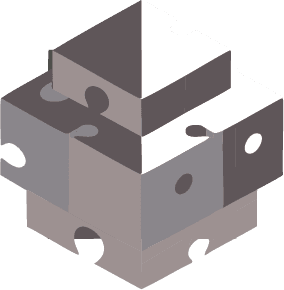



79% users found it hard to reach all the buttons and functions in sewing machines.
68% users found it very hard to use.
62% users felt pain in their wrists while using a stitching machine.
75% users said that learning to use a stitching machine is hard.
68% users found setting up a stitching machine to be extremely difficult .
"It was concerning that so many users felt using stitching machine painstakingly difficult! It gave me problems that I need to solve, Including ease of use, ergonomics, and portability."
Usability Testing
It became necessary to test stitching machines for usability tests to understand the problems In depth. By mapping the user journey, user behaviour patterns and understanding pain points.
X 5
Highlights
several problems related to the usability and functionality of a portable sewing machine. One of the main challenges is that it is difficult to use or set up for beginners, with complications in threading the machine and understanding its basic functions. Additionally, ergonomics and usability pose significant issues, as the machine is hard to use for extended periods due to its weight and the uncomfortable posture required for operation. It lacks an adjustable cloth holder or an automatic cloth mover, limiting its flexibility. The machine also has to be placed on a surface, restricting its portability.
From a technical standpoint, the machine is prone to thread tangling and can only perform a chain-link stitch, which is not the most ideal or durable stitch type. Changing thread colors is also cumbersome, adding to the complexity. Safety concerns arise from the fact that the machine can potentially turn on involuntarily, posing a danger to users. Furthermore, it requires frequent battery replacements, which can be inconvenient.
Finally, the machine struggles with handling delicate materials—users have no designated space to hold or carry small, fragile parts, which can easily fall and get lost. This combination of factors makes the machine less suitable for precision work and long-term use."
Research Synthesis
After doing both primary and secondary research, I synthesised data and insights into several pain points that are crucial for user success.
Pain Points
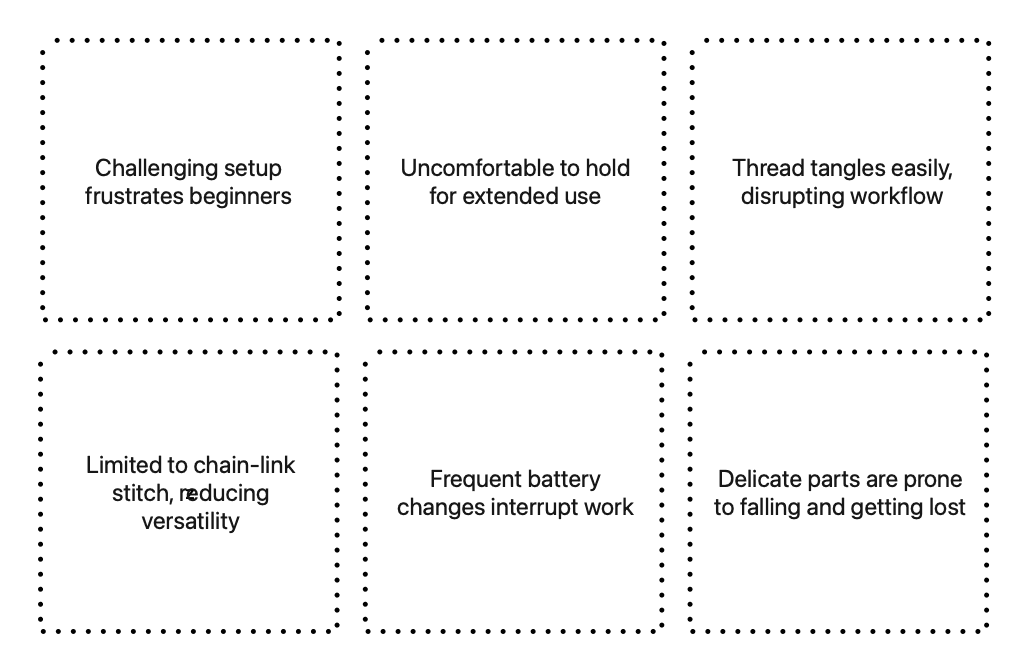
Key Insights



User Experience Complexity
Ergonomic and Usability Limitations
Functional Inefficiencies
Beginners struggle with setting up and operating the machine due to its complicated design and lack of intuitive features, highlighting the need for a more user-friendly interface.
The machine’s weight and lack of adjustable features make it uncomfortable for prolonged use, suggesting that portability and ergonomic improvements are essential.
Regular thread knotting, dependency on power cells, and the incapacity to conduct varied stitch methods greatly impair productivity, suggesting the requirement for improved technological and functional capabilities.
Empathise
Discover users need and problems, through user persona.
Maria is a skilled tailor who works on a variety of custom orders, ranging from wedding dresses to alterations. She often needs to transport her tools between her home studio and clients’ locations. While she loves her craft, she struggles with maintaining productivity when her equipment isn’t convenient or reliable.
Age: 35
Occupation: Freelance Tailor and Dressmaker
Location: Urban area, small home studio
Experience: 10+ years in sewing and tailoring
Tech-Savviness: Intermediate, uses a mix of traditional and portable machines but prefers hands-on tools.
Finds it frustrating to thread and set up the portable machine, which slows down her work.
Struggles with the weight and posture when using the portable machine for long periods.
Constantly dealing with tangled threads, which interrupts her workflow and increases stress during tight deadlines.
Feels restricted by the chain-link stitch function, especially when working on more intricate designs.
Finds it annoying to replace batteries often, which increases her downtime and disrupts her flow.
Wants a reliable, portable machine that can handle complex designs without frequent malfunctions or interruptions.
Seeks a sewing machine that’s lightweight and easy to carry to client appointments.
A machine that is simple to set up and operate, with fewer disruptions like tangled threads and battery replacements.
Prefers to create high-quality, durable stitches without being limited by machine capabilities.
“I need a machine that’s as flexible as I am—portable, easy to set up, and reliable enough to handle my projects on the go.”
Background
Maria
Frustrations
Goals
Ideate
Helping user achieve goals easily
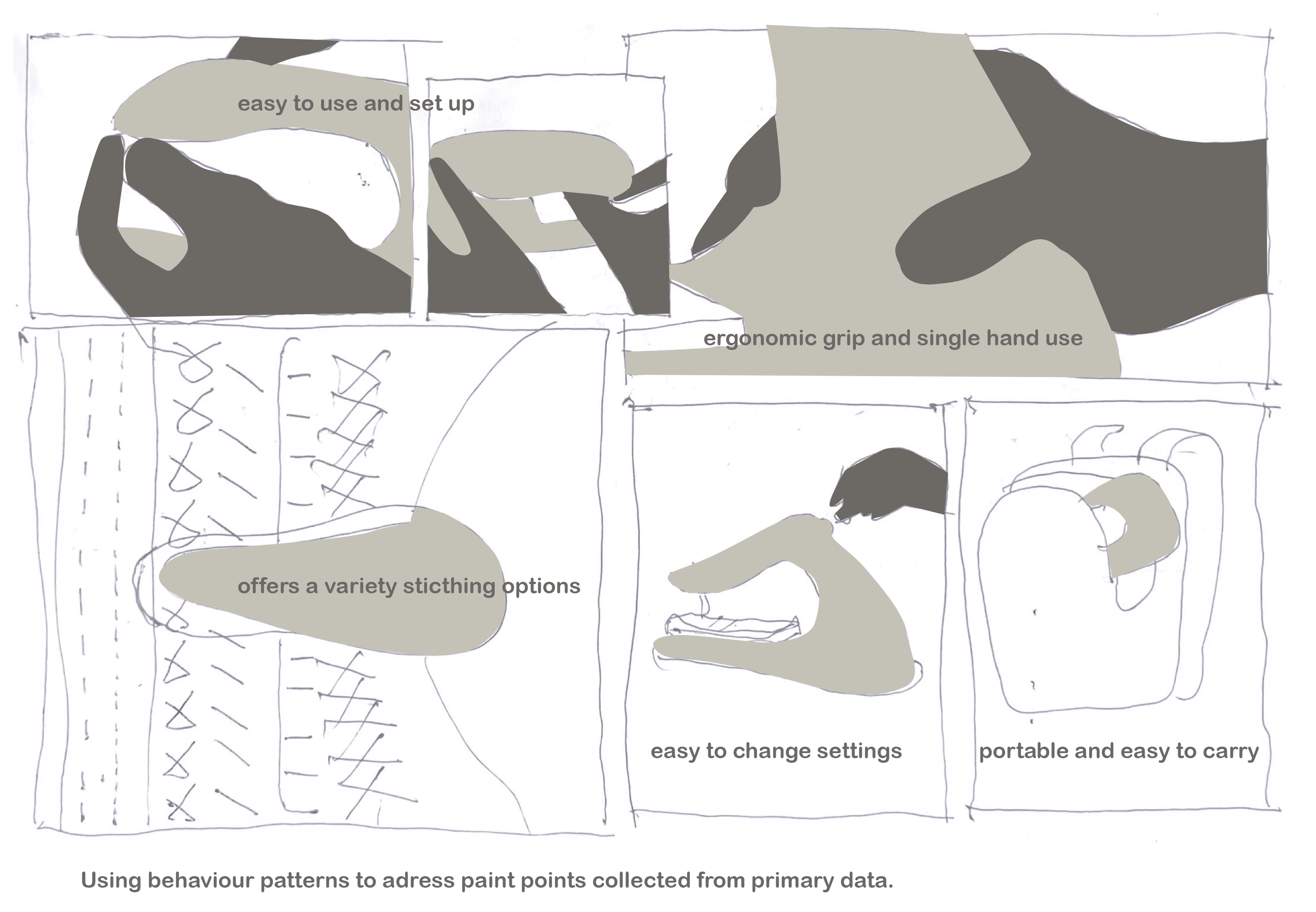
Sketching
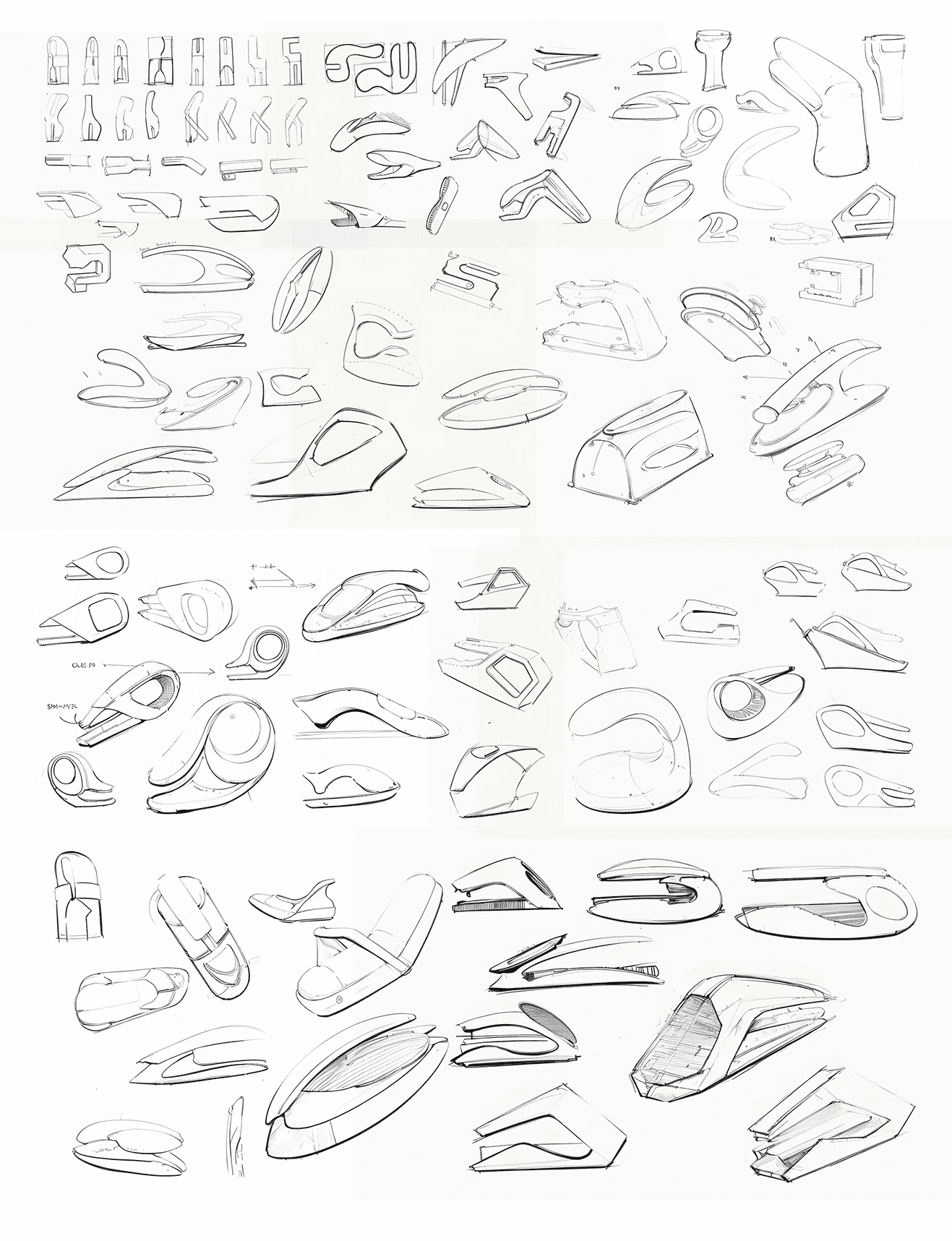
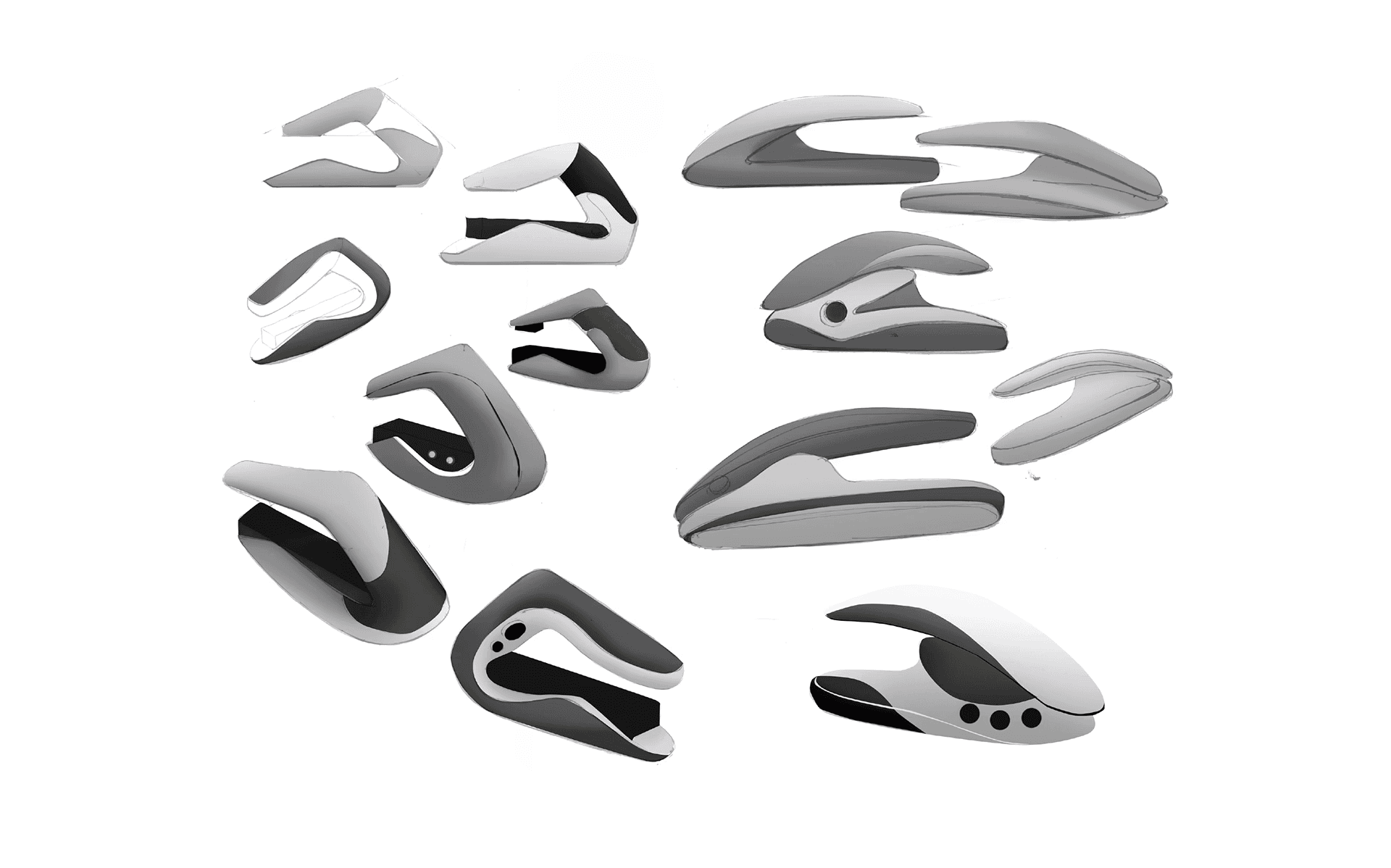
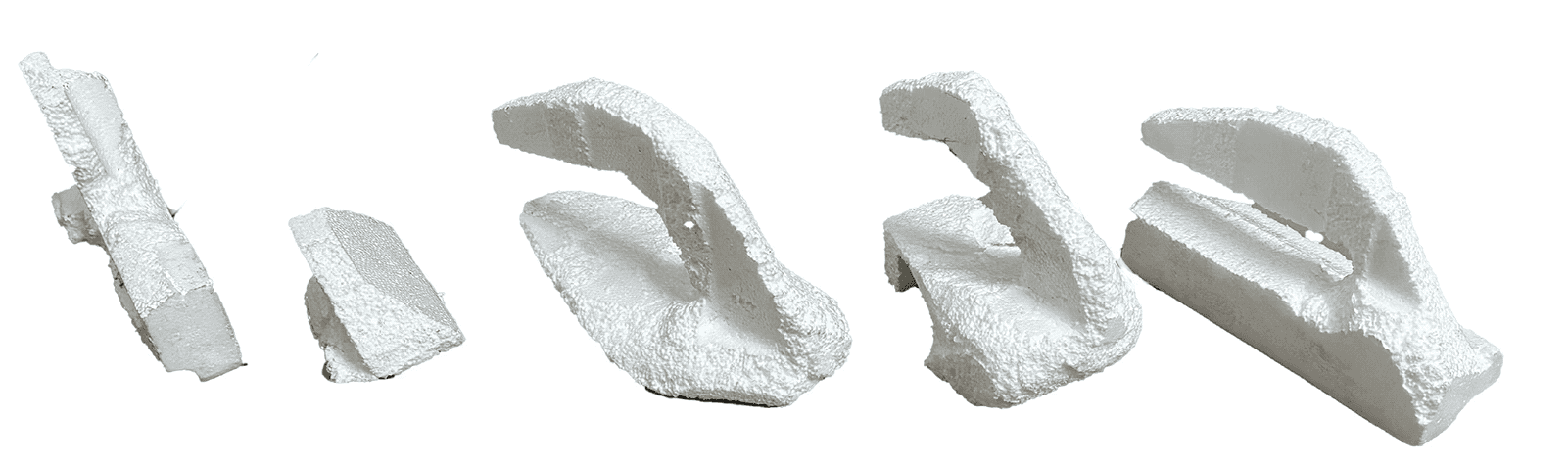
thermocol mockups
I created thermocol mockups to make sure the shape and size was ergonomic and fitted right.
Creating a new user experience
Prototype
Brings value to the users
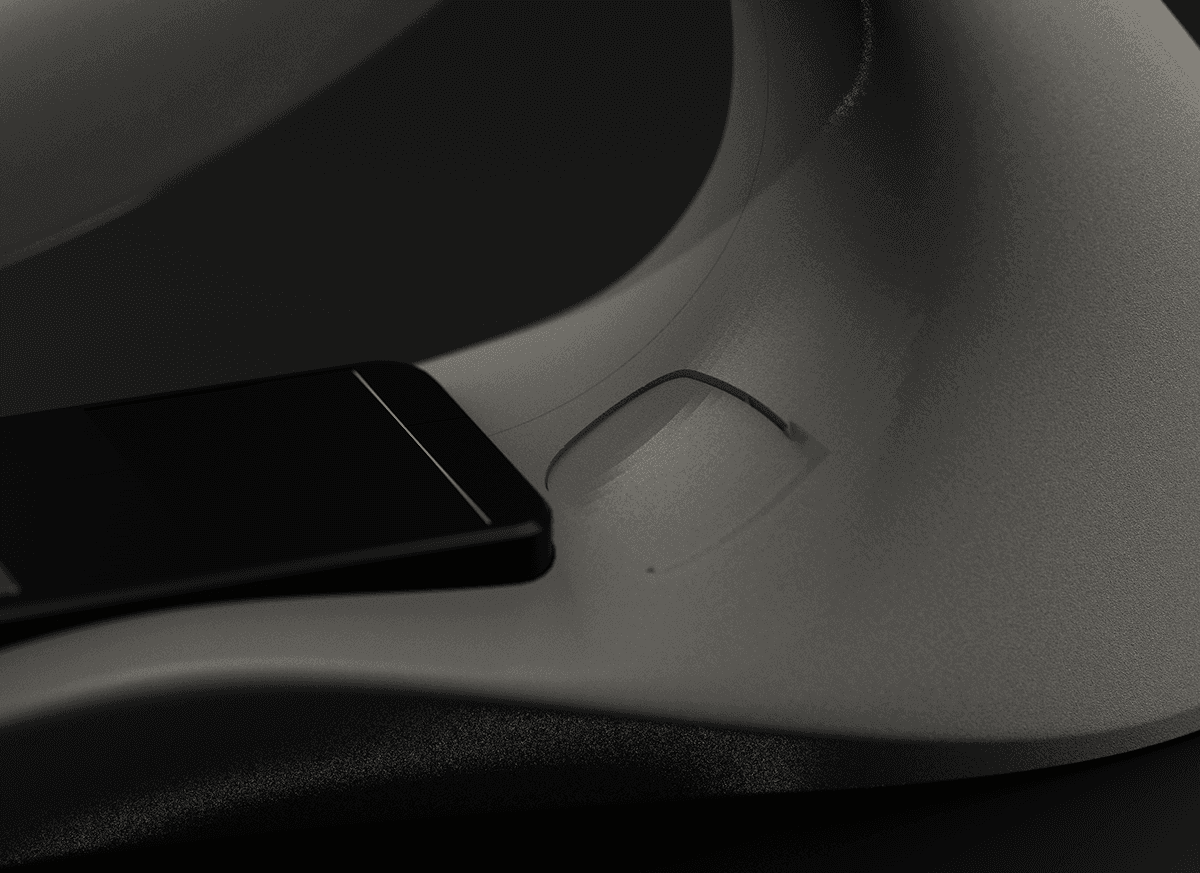
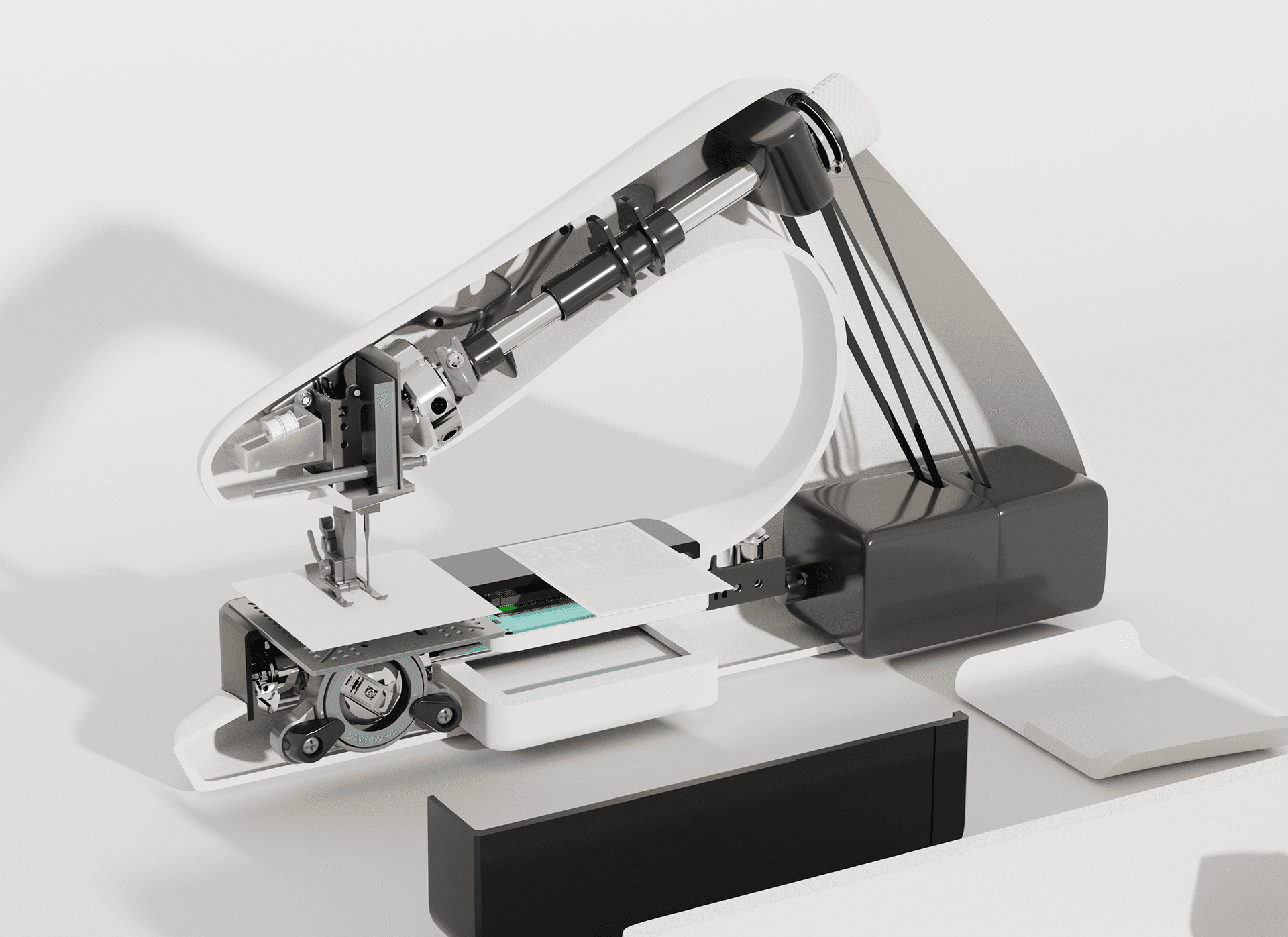
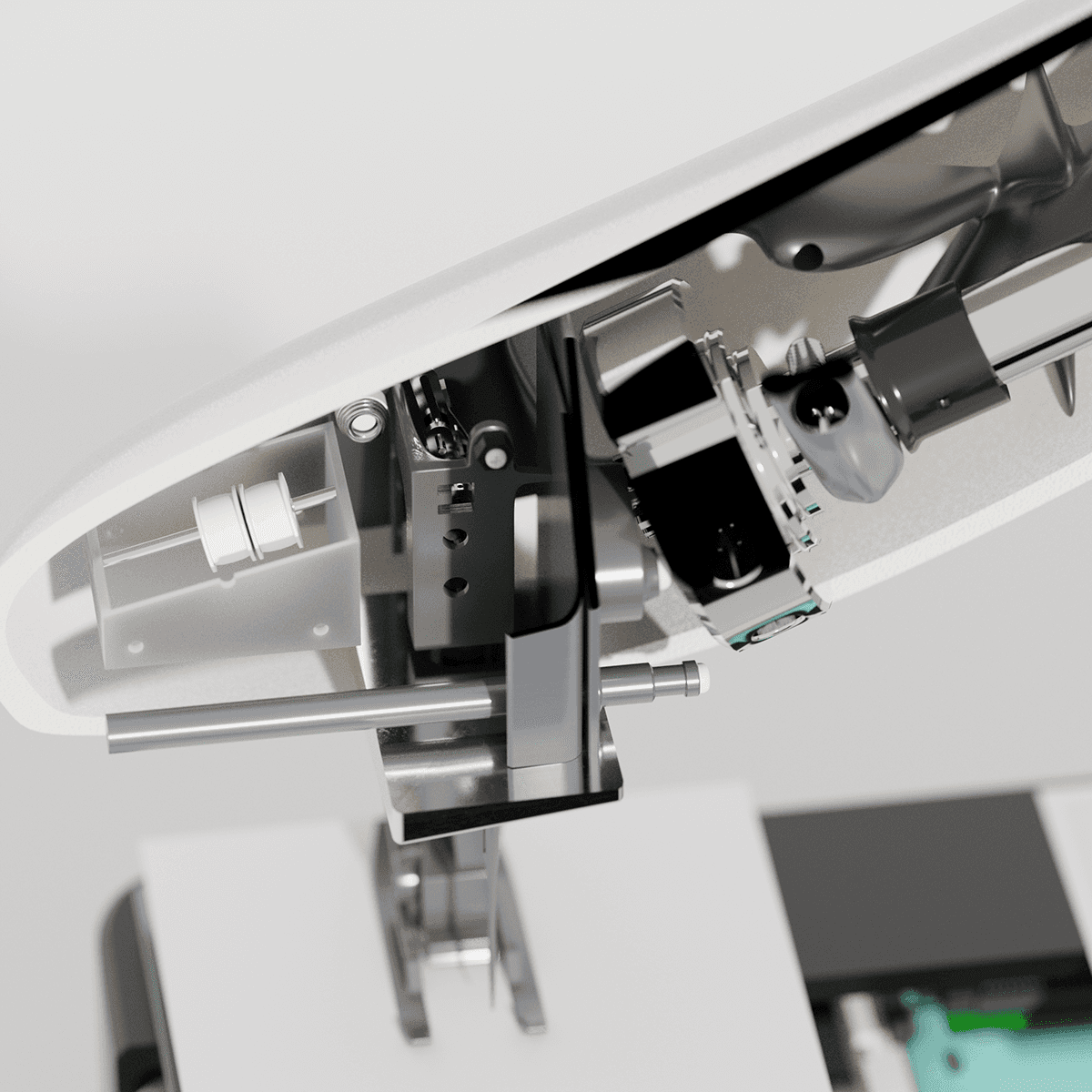
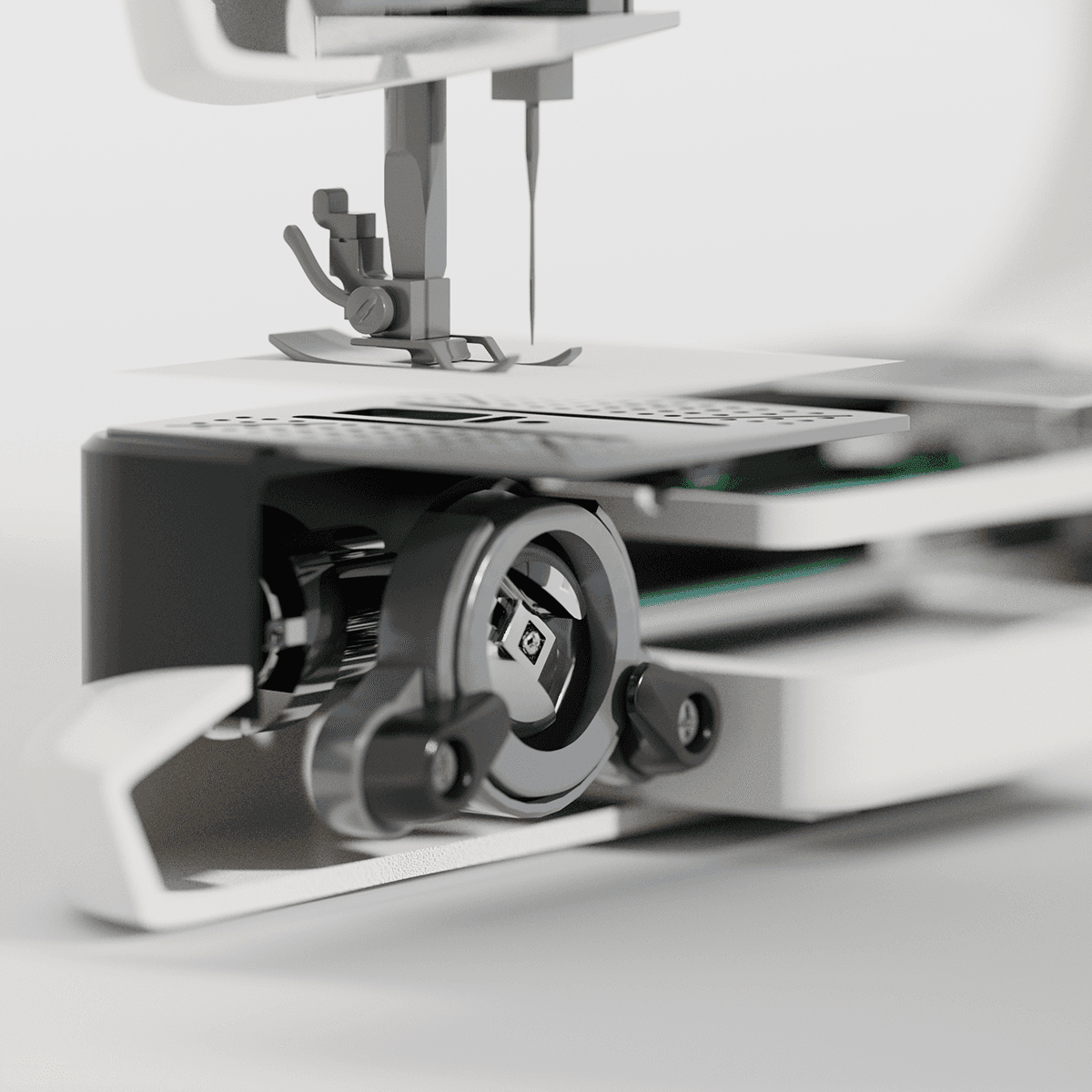
Redesigning Internals for the new body
Reflection
How can I improve the experience even further
What I learnt
1. Research, research, research
ISome of my colleagues said I should spend less time in the research process, but honestly, Il rellcognized the more I put effort in research, the better quality could be achieved. I like how my design was able to include much more in-depth understanding of users' pain points that were key to defining the problem scope.
#2. Prioritise target audience
When I first design the app, I was distracted by too much information provided by wide range of voices. Therefore, I tried to satisfy all the users' needs and that's the point I lost to make decisions. I learned prioritizing the most concerned and overlapped problem is crucial to take further steps in design process.
Next Step
Developing a working prototype
I had started the process developing the STL model for 3D printing, But I met the deadline before I could. Further in this project a physical prototype which can host various mechanism inside would be the next step to understand if the new form factor is actually portable and ergonomic.